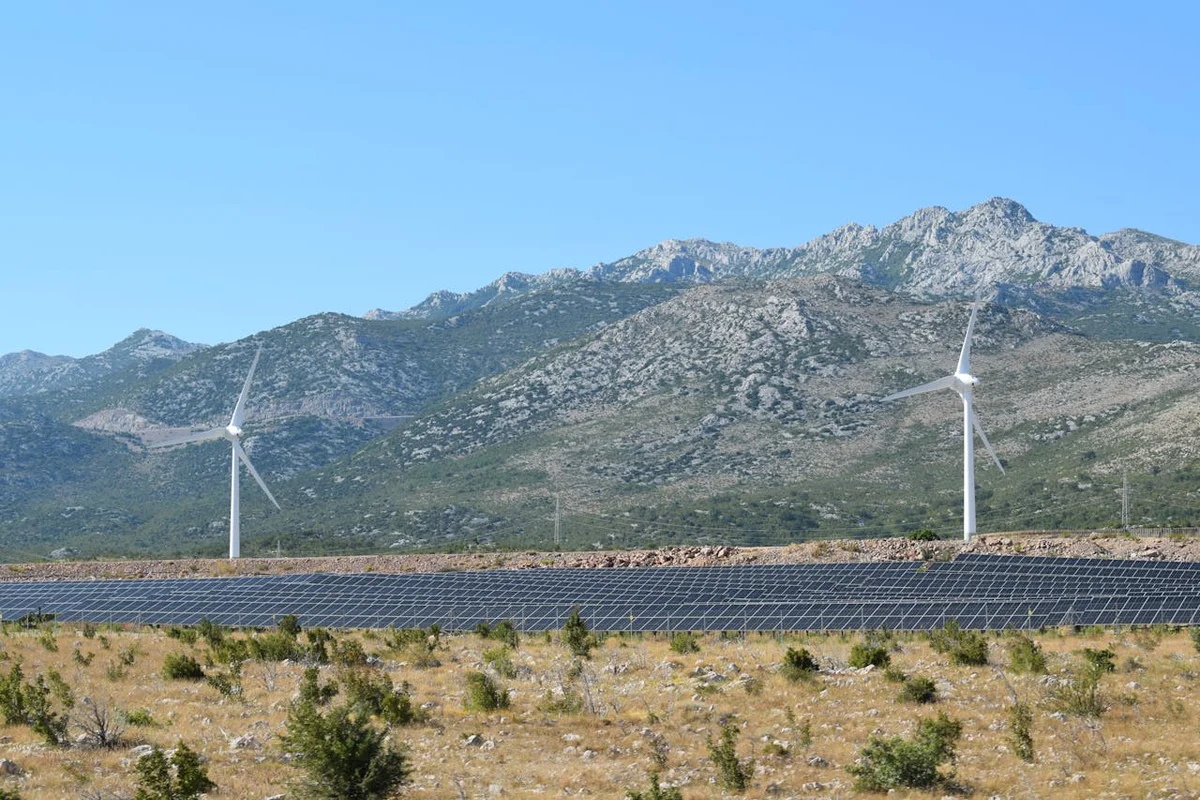
Carbon-Neutral Web Hosting: Which Providers Are Actually Green?
The internet consumes roughly 3.7% of global electricity. Every website you visit, every email you send, every image that loads runs on a physical server in a data center somewhere, drawing power 24 hours a day. Hosting providers know that eco-conscious buyers are growing, and "green hosting" has become a marketing term that gets thrown around loosely. Some providers genuinely offset their carbon footprint. Others plant a few trees and call it a day.
This article examines what green hosting actually means, which providers back their claims with real action, and whether choosing an eco-friendly host requires sacrificing performance or paying a premium.
What Makes Hosting "Green"?
Green hosting falls into three tiers, from most impactful to least.
Tier 1: Renewable Energy Powered Data Centers
The gold standard. The hosting provider runs its own data centers (or exclusively uses data centers) powered by wind, solar, or hydroelectric energy. Google Cloud, which powers Kinsta, has been matching 100% of its electricity consumption with renewable energy purchases since 2017 and aims to run on carbon-free energy 24/7 by 2030.
Tier 2: Renewable Energy Credits (RECs)
The provider buys certificates that fund renewable energy production elsewhere. GreenGeeks operates this way, purchasing 3x the energy their servers consume in the form of wind energy credits through the Bonneville Environmental Foundation. This does not mean their actual servers run on wind power. It means they fund enough renewable energy to offset 300% of their usage.
RECs are legitimate but imperfect. They finance new renewable energy projects, which is genuinely positive. The criticism: your data center might still run on coal while the RECs fund a wind farm 2,000 miles away. The net carbon effect is positive, but the local environmental impact remains.
Tier 3: Carbon Offsets
The provider calculates their carbon emissions and pays to offset them through tree planting, forest preservation, or other carbon capture projects. This is the weakest form of green hosting because offset programs vary wildly in quality and verification.
Provider-by-Provider Green Credentials
GreenGeeks: The 300% Green Claim
GreenGeeks is the most vocal about sustainability in the hosting industry. Founded in 2009, they purchase Renewable Energy Credits equal to 300% of the energy their platform consumes. They partner with the Bonneville Environmental Foundation (BEF), a recognized environmental nonprofit, and are a recognized EPA Green Power Partner.
Their shared hosting starts at $2.95/mo (yearly billing, renews at $13.95/mo). VPS plans begin at $69.95/mo with 4 vCPU and 4 GB RAM. All plans include free SSL, a CDN, and nightly backups. Performance uses LiteSpeed web servers, which are both faster and more energy-efficient than Apache, consuming less CPU per request.
| GreenGeeks Plan | Price | Renewal | Storage | Sites |
|---|---|---|---|---|
| Lite (Shared) | $2.95/mo | $13.95/mo | 25 GB SSD | 1 |
| Pro (Shared) | $4.95/mo | $18.95/mo | 50 GB SSD | Unlimited |
| Premium (Shared) | $8.95/mo | $30.95/mo | 100 GB SSD | Unlimited |
| VPS 4GB | $69.95/mo | $69.95/mo | 75 GB SSD | Unlimited |
| VPS 8GB | $129.95/mo | $129.95/mo | 150 GB SSD | Unlimited |
The honest take: GreenGeeks is the most committed green host in the shared hosting space. The 300% REC purchase is verified and genuine. They are not just carbon neutral. They are carbon negative. The trade-off? Their performance is solid but not exceptional compared to premium hosts. For most small to medium sites, that is perfectly fine.
Kinsta: Google Cloud's Renewable Backbone
Kinsta runs entirely on Google Cloud Platform infrastructure. Google has matched 100% of its global electricity consumption with renewable energy since 2017 and achieved a Power Usage Effectiveness (PUE) of 1.10, which is among the most efficient in the industry (the industry average sits around 1.58). Google's data centers use 50% less energy than a typical data center.
Kinsta's WordPress plans start at $29.17/mo (yearly billing) for a single site with 35,000 monthly visits. Their entire platform also integrates Cloudflare Enterprise, which operates its own carbon-neutral network.
| Kinsta Plan | Price (Yearly) | Sites | Visits/mo | Storage |
|---|---|---|---|---|
| Single 35k | $29.17/mo | 1 | 35,000 | 10 GB |
| WP 2 | $58.33/mo | 2 | N/A | 20 GB |
| WP 5 | $95.83/mo | 5 | N/A | 30 GB |
| WP 10 | $187.50/mo | 10 | N/A | 40 GB |
Kinsta does not market itself as a "green host." They do not need to. Google Cloud's infrastructure does the heavy lifting. If environmental impact is a priority and you need premium WordPress hosting, Kinsta gives you both without compromise on speed.
SiteGround: Google Cloud, Same Benefits
SiteGround migrated its infrastructure to Google Cloud Platform in 2020. This means SiteGround sites benefit from the same renewable energy matching that powers Kinsta, but at a lower price point. Their shared hosting starts at just $2.99/mo (yearly, renews at $17.99/mo) with 10 GB SSD storage.
SiteGround does not loudly promote green credentials, but by choosing Google Cloud, they inherited one of the most energy-efficient hosting infrastructures on the planet. Their cloud plans start at $100/mo with 4 cores and 8 GB RAM.
DigitalOcean: Sustainability in Progress
DigitalOcean published its first Environmental, Social, and Governance (ESG) report in 2022 and committed to achieving net-zero emissions. Several of their data centers use renewable energy sources. Their NYC data centers, for instance, source power from the New York grid, which has a significant hydroelectric component.
DigitalOcean Droplets start at $4/mo for 1 vCPU, 512 MiB RAM, and 10 GiB NVMe SSD. Their App Platform (PaaS) starts at $5/mo. The company is transparent about the fact that not all their data centers run on renewables yet, but they are working toward it.
Cloudways: Provider-Dependent Green Status
Cloudways is a managed hosting platform that deploys on five different cloud providers: DigitalOcean, Vultr, Linode (Akamai), AWS, and Google Cloud. The green credentials depend entirely on which provider you choose. Pick Google Cloud through Cloudways, and your hosting inherits Google's renewable energy matching. Choose Vultr, and the sustainability picture is different.
Cloudways plans on DigitalOcean start at $14/mo (1 vCPU, 1 GB RAM, 25 GB NVMe). On Google Cloud, the cheapest option is $37.33/mo with 1.7 GB RAM. If going green matters to you, selecting the Google Cloud backend on Cloudways is the way to go.
A2 Hosting: FutureServe Green Hosting
A2 Hosting participates in carbon offset programs through their FutureServe Green Hosting initiative. They partner with Carbonfund.org to offset their carbon footprint. Their approach is Tier 3 (carbon offsets), which is the least impactful green method, but it is more than most hosts do.
FastComet and HostArmada: No Green Claims
FastComet and HostArmada do not make specific sustainability claims. Both offer excellent hosting at competitive prices, but green credentials are not part of their value proposition. If sustainability is a deal-breaker for you, these are not your best options.
Green Hosting Comparison Table
| Provider | Green Approach | Verification | Starting Price | Infrastructure |
|---|---|---|---|---|
| GreenGeeks | 300% RECs (wind energy) | EPA Green Power Partner, BEF | $2.95/mo | Own data centers |
| Kinsta | 100% renewable via Google Cloud | Google sustainability reports | $29.17/mo | Google Cloud Platform |
| SiteGround | 100% renewable via Google Cloud | Google sustainability reports | $2.99/mo | Google Cloud Platform |
| DigitalOcean | Net-zero commitment, partial renewable | ESG reports (public) | $4/mo | Own data centers |
| Cloudways | Depends on chosen provider | Varies | $14/mo | Multi-cloud (choose GCP for green) |
| A2 Hosting | Carbon offsets (Carbonfund.org) | Carbonfund partnership | $1.99/mo | Own data centers |
| FastComet | None stated | N/A | $2.19/mo | 11 global data centers |
| HostArmada | None stated | N/A | $2.49/mo | Cloud-based |
Does Green Hosting Cost More?
The short answer: no. GreenGeeks' shared plans start at $2.95/mo, which is competitive with non-green alternatives. SiteGround at $2.99/mo is cheaper than many hosts with zero green credentials. The only "premium" green option is Kinsta, but Kinsta is expensive because it is managed WordPress hosting, not because it is green.
Choosing green hosting does not mean paying extra. It means choosing the right provider from a pool that already offers competitive prices. If you are on a tight budget, GreenGeeks Lite at $2.95/mo or SiteGround StartUp at $2.99/mo give you genuine green credentials at the same price as standard shared hosting. Use our True Cost Calculator to see what these plans actually cost over 2-3 years, including renewal prices.
Beyond Your Host: Reducing Your Website's Carbon Footprint
Choosing a green host is a solid first step, but your website's design and optimization also matter.
- Optimize images. An uncompressed 5 MB hero image served to 10,000 visitors transfers 50 GB of data. Compress it to 200 KB, and you cut that to 2 GB. Less data transferred means less server and network energy consumed.
- Use efficient caching. Serving pages from cache instead of regenerating them from the database on every request reduces CPU usage dramatically. SiteGround's SuperCacher and Kinsta's edge caching handle this automatically.
- Pick a closer data center. Data traveling shorter distances uses fewer network hops and less energy. Choose a server location near your primary audience.
- Minimize JavaScript. Heavy JS frameworks force the visitor's device to work harder (burning more battery) and require more server resources to serve. A lighter site is both faster and greener.
- Use a CDN. Content Delivery Networks distribute your content to edge servers globally, reducing the distance data travels. Both Kinsta and GreenGeeks include CDN access with their plans.
How to Verify Green Claims
Before trusting a provider's green marketing, check for these indicators.
- The Green Web Foundation directory. This nonprofit maintains a database of verified green hosting providers. GreenGeeks and several others are listed. Check at thegreenwebfoundation.org.
- EPA Green Power Partner status. GreenGeeks holds this designation, which requires verified renewable energy purchases.
- Published sustainability reports. Google (powering Kinsta and SiteGround) publishes detailed annual sustainability reports with specific metrics. If a host claims to be green but cannot point you to a report or certification, be skeptical.
- Specific partnerships. Named partnerships with organizations like BEF or Carbonfund.org are verifiable. Vague claims like "we care about the environment" without specifics are marketing.
Our Recommendation
Best green host for most websites: GreenGeeks. Their 300% renewable energy offset is the strongest commitment in the shared hosting space, verified by third parties. Plans are affordable, and performance is solid for small to medium sites.
Best green host for WordPress performance: Kinsta. Google Cloud infrastructure delivers both top-tier speed and genuine renewable energy backing. You pay more, but you get a premium product.
Best budget green option: SiteGround. Google Cloud infrastructure at shared hosting prices ($2.99/mo). The green benefit is a bonus on top of already excellent hosting.
Best for developers who care about sustainability: DigitalOcean. Transparent about their progress, actively working toward net-zero, with the flexibility developers need. Starting at $4/mo for a Droplet.
Green hosting is no longer a niche. It is a practical, affordable choice that does not require sacrificing speed, features, or budget. The providers who take it seriously have made it easy to host responsibly. You just need to pick one and deploy.
For related reading, check our AI-Powered Hosting deep dive and our hosting type comparison to find the right plan structure for your needs.